
AI & MedTech
In the age of AI and other emerging technologies, why are over 4.5 billion people not fully covered by essential health services -- with 400 million lacking access to basic healthcare?
In the books, articles, and videos below, you’ll find first-hand, behind-the-scenes accounts from Doctors Without Borders (MSF), Becton Dickinson (BD), IDC, Stealth AI, healthcare accelerators, and a digital transformation healthcare company, all pushing the boundaries of access and affordability. These authors work in different sectors around the world, each with 20 – 40 years of experience.
They alert us to new innovations, approaches, and actionable insights. Corporate executives, entrepreneurs, investors, and donors will find here new technologies and markets, end-use adaptations, and AI-enabled cross-sectoral analysis designed to uncover hidden gems that enable market expansion. Healthcare Professionals will gain exposure to innovative solutions that could revolutionize their own patient services. Policy Makers and NGOs will encounter new ways to improve health equity. And academics will gain case examples and deep insights on which to build.
Perhaps most importantly, every reader should see that despite challenges,
the vision of universal healthcare is finally within our reach.
AI & MedTech
In the age of AI and other emerging technologies, why are over 4.5 billion people not fully covered by essential health services -- with 400 million lacking access to basic healthcare?
In the books, articles, and videos below, you’ll find first-hand, behind-the-scenes accounts from Doctors Without Borders (MSF), Becton Dickinson (BD), IDC, Stealth AI, healthcare accelerators, and a digital transformation healthcare company, all pushing the boundaries of access and affordability. These authors work in different sectors around the world, each with 20 – 40 years of experience.
They alert us to new innovations, approaches, and actionable insights. Corporate executives, entrepreneurs, investors, and donors will find here new technologies and markets, end-use adaptations, and AI-enabled cross-sectoral analysis designed to uncover hidden gems that enable market expansion. Healthcare Professionals will gain exposure to innovative solutions that could revolutionize their own patient services. Policy Makers and NGOs will encounter new ways to improve health equity. And academics will gain case examples and deep insights on which to build.
Perhaps most importantly, every reader should see that despite challenges,
the vision of universal healthcare is finally within our reach.
These books and articles were produced at S P Jain School of Global Management, which offers degree programs and executive education to craft global business leaders. The organization is known for its innovative approach to education and its leading-edge use of technology — the kind we need in healthcare and to develop the leaders we need for tomorrow’s healthcare.
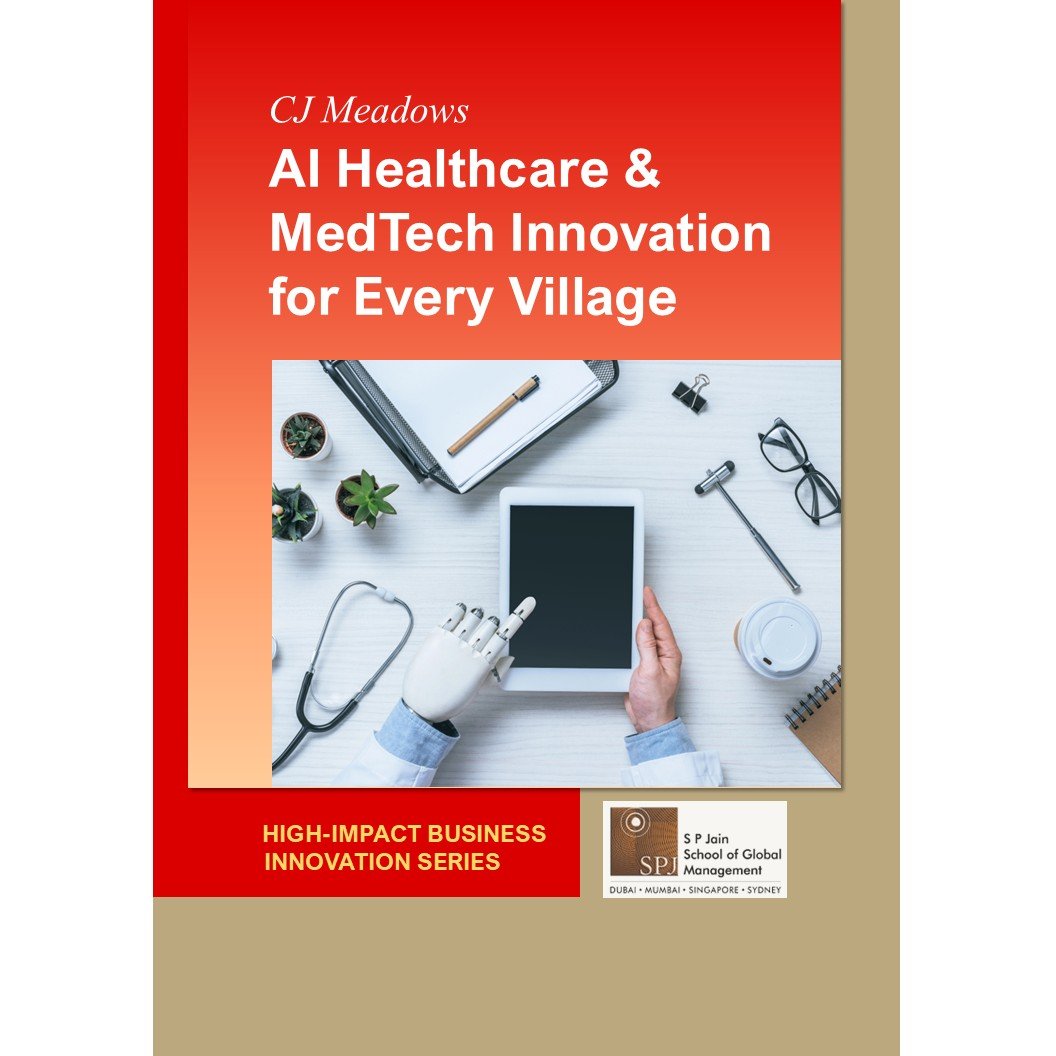
Coming Soon in 2026! Book 3 in the Fusion series, published by De Gruyter Brill
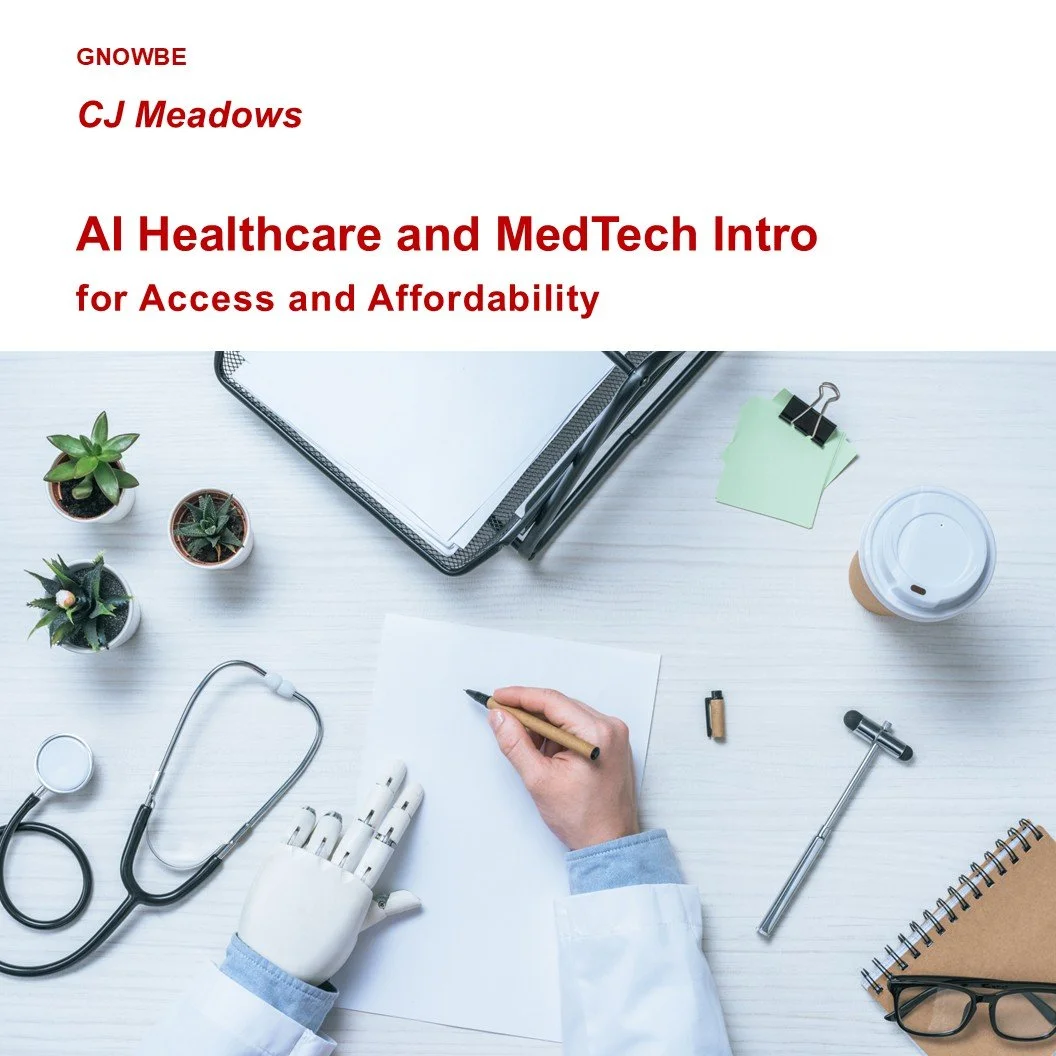
Coming Soon in 2026! Multimedia "living book" published by Gnowbe

To chat with my digital twin v1 about these books and articles and how you might apply the ideas in your own situation, just visit CJ2.personal.ai.

To chat or speak with my new digital twin (v2) about these books and articles and how you might apply the ideas in your own situation, just visit delphi.ai/CJ2.
work in progress!! The videos below are only placeholders until the real videos are done.
The chapter summaries and author bios are quite real, as are the LinkedIn links, so feel free to connect and collaborate. Enjoy!
Introduction: Setting the Stage for Healthcare Revolution by Dr. CJ Meadows, SPJ Global
This “chapter” sets the stage for why now’s the time to address access and affordability, with the advent of AI, GenAI, MedTech, Robotics, data analytics, mobile connectivity (more people have access to a mobile phone than clean water!), and other emerging technologies. Although “for Every Village” is part of the title, many of the innovations, approaches, and insights in this book are equally applicable to inner cities, homes of elders trying to maintain independence, emergency and natural disaster zones, and any situation where access and affordability are challenges.
The introduction also places the book within the High-Impact Business Innovation series, tying it to the original series idea of “Fusion” – crossing boundaries of industry, technology, nation, organizational silo, social class, and more to integrate disparate ideas, technologies, etc. into radical innovation that brings a great deal of value to the world (the way a great deal of energy is released in nuclear fusion). Radical healthcare advances from the book that spawned this series, as well as those from the first book in the series, will be introduced, as well as the digital twin companion, multimedia intro, and book webpage.
Book Editor & Author: Awarded as one of Asia’s Top-10 Women in IT, Dr. CJ Meadows is Professor and Innovation Center Head at SPJ Global and Chairman of The Tiger Center. Holding a Doctorate in Business Administration and IT from Harvard Business School, she has authored 13 books and over 50 articles on innovation and related topics. She has 30+ years’ global experience as a consultant, entrepreneur, educator, and Accenture IT and Business Strategy consultant.

Chapter 1: The Future of Asia Pacific Healthcare: Digital Ecosystems, Access, and Implications for the World by Manoj Vallikkat, IDC
This author leverages his leading-edge analysis on the future of Asia Pacific’s Healthcare Industry to explore emerging trends, technologies, eco-system evolution, and what this means for healthcare access and affordability worldwide. His insights should help key stakeholders in Asia Pacific see opportunities and roadblocks and set the stage for driving impactful change. They should also stimulate leaders in other geographies to consider similarities and differences with their own situation and suggest key directions to pursue.

Author: Manoj Vallikkat analyzes and reports on the future of the Healthcare Industry in Asia Pacific as IDC’s Senior Research Manager - Healthcare Insights Asia/Pacific. He does this through in-depth understanding of Digital Transformation, emerging trends, and driving forces in the healthcare eco-system. His insights enable key stakeholders to become future-ready and drive impactful change.
Chapter 2: AI Analysis Making Visible What Is Invisible: The Case of Maternal and Infant Care in Ethiopia by Dr. Ralph Welborn & Vince Casten, Sunasi AI
This chapter introduces a new AI-enabled platform and method for analyzing cross-sectoral and cross-industry capabilities. In essence, it’s the AI basis for analyzing “fusion” (innovation across various types of borders) – a technological and data-driven approach to extend the psychological approach used in the book that spawned this series.
The graphical analysis and algorithmic (AI) insights into business value identify untapped disruptive value, as well as specific capabilities, technologies, and companies likely to drive it. Actual analysis (including graphical) is provided as an example, aimed at designing more effective maternal and infant health intervention programs in stressed environments across 8 Ethiopian regions. Key questions explored include (1) what might we do (what works where, when, and under what conditions?); (2) who should be involved (to do what, where, and with what expected outcomes); and (3) how to start (and stop).
This analysis approach enables decision-makers to see bundles and dependencies, prioritize, scope intervention efforts, choose partners, and assess environmental fit. With this approach, decision-makers can assess the effectiveness of current and proposed programs based on actual data; design more effective programs; strengthen, speed, and scale intervention training; and support technologies and/or capabilities most likely to “move the needle” for health outcomes and returns.

Co-Author: Dr. Ralph Welborn, Co-Founder of Sunasi AI & Stealth AI, formerly worked for PWC, IBM, KPMG, and DARPA. He develops algorithmic (AI) insights into business value, making visible what is invisible and tackling hard questions in new ways. He identifies disruptive value hiding in plain sight in and across industries like healthcare, as well as the specific capabilities, technologies and companies likely to drive it.

Co-Author: Vince Casten, Co-Founder of Sunasi AI, formerly worked for Prudential, IBM, Unisys, KPMG, and Bell Labs. He applies AI and analytics to originate, develop, and disseminate investment and risk insights. He also serves as Chief AI Officer & Board Advisor for Cenkusha Ltd., a Singapore-based company providing platforms and services for operational intelligence, improvement, and optimization.

Co-Author: Jacob Welborn works with Socio En Salud (Peru) on food security and health delivery. With a Masters of Science from the Friedman School of Nutrition Science and Policy at Tufts University and research experience with the Feinstein International Center, he is an agroecology and food systems professional specializing in food security, humanitarian response, and sustainable agriculture in complex environments, strengthening nutrition and social protection systems.
Chapter 3: Last-Mile Medicine Across the Globe, by Sophie Delaunay, Doctors Without Borders (Médecins Sans Frontières - MSF)
Healthcare professionals face a range of challenges in the final stage of delivering healthcare services and medicines to end consumers/patients, particularly in remote or underserved areas. Special (but not uncommon) challenges arise when working in conflict zones, epidemics and pandemics, natural disasters, and rural or economically-challenged communities.
Doctors Without Borders, which specializes in these difficult situations, has of necessity crafted a variety of innovations and approaches that should prove useful to other organizations striving to provide universal healthcare. For example, in rural Africa, without nearby laboratories to test for antibiotic resistance, MSF crafted a new device that could provide the same analysis and enable doctors to prescribe life-saving medicines instead of ineffective ones that waste time and money, inadvertently allowing patients to die. This chapter introduces various MSF innovations and approaches, as well as key learnings and insights that should help others provide essential care and extend their reach. It also encourages pharmaceutical and device companies to consider last-mile use for large, under-served populations when they develop drugs and devices.
Co-Author: Sophie Delaunay, Director of Transformational Investment Capacity at Doctors Without Borders (Médecins Sans Frontières -- MSF), has 30+ years of experience responding to international medical emergencies in-field and at HQ, across private and public sectors. With in-depth knowledge of international aid and global health, she analyzes needs and contexts, evaluates programs, designs health strategies, and conducts interventions and high-level diplomacy.

Co-Author: Dr. John Boudreau, Professor Emeritus at USC, is globally recognized for breakthrough research on the bridge between superior human capital, talent and sustainable competitive advantage. He consults and conducts executive development with companies worldwide to maximize employees’ effectiveness by discovering the strategic bottom-line impact of superior people and human capital strategies. He has published over 50 books and articles for Harvard Business School publishing, Stanford University Press, and others.





The authors would like to thank their colleagues Katie Fernandez, Bo Strange-Sorensen, Junaid Khan and Martina Casenghi for their careful review and insightful contributions to this chapter (at left).
Chapter 4: Healthcare Innovation In-Context: Corporate R&D within Emerging Markets by Dr. Hemant Belsare, Becton Dickinson (BD)
Large organizations face distinctive challenges to innovation, including cross-silo problem-solving, risk-avoidance when considering radical innovation, and even regulatory roadblocks when operating within target markets, attempting to innovate in-context. Based on his doctoral work in this area as well as years of experience in the field, this author shares recent advances, challenges, and approaches to overcoming them.
Author: Dr. Hemant Belsare, Global R&D Leader at Becton Dickinson (BD) has 25+ years of experience in R&D, program management, product design, and medical device engineering at BD, GE Healthcare, Philips Healthcare, Emerson, and elsewhere. Experienced in global, cross-functional product development for US, Europe, and Asia, he has a strong record of building organizations, as well as innovative, customer-focused, profitable products.

Chapter 5: [Chapter in Corporate Approval Process]
Watch this space for more. :) There’s a well-known technology company in the process of approving a chapter, so we’ll wait for final approval before revealing the surprise.

Author: Dr. CJ Meadows is keeping this spot open for a terrific new author. :)
Chapter 6: Patient-Facing AI Healthcare by Dr. CJ Meadows, S P Jain School of Global Management
In this chapter, the author shares global examples of patient-facing AI healthcare, including oncology bots, platforms for depression, AI-assisted telemedicine (e.g. WeDoctor in China, which hosts 210-240 million users and 360,000 doctors), and more. A new robotic store developed in Singapore could be used for pharmaceutical access with face and fingerprint verification. If combined with new technology that detects breast cancer from fingerprints, going to the “store” for a prescription refill could save your life. Ethical, legal, and logistical issues will also be introduced. For example, in emerging-economy contexts, some of the technologies could be used with mobile phones, and some might need to be integrated into mobile facilities to keep the technologies secure. Nonetheless, the author shares a vision of how such technologies could be used in the not-for-profit she chairs, working with some of the world’s poorest communities in central India.
Book Editor & Author: Awarded as one of Asia’s Top-10 Women in IT, Dr. CJ Meadows is Professor and Innovation Center Head at SPJ Global and Chairman of The Tiger Center. Holding a Doctorate in Business Administration and IT from Harvard Business School, she has authored 13 books and over 50 articles on innovation and related topics. She has 30+ years’ global experience as a consultant, entrepreneur, educator, and Accenture IT and Business Strategy consultant.
Chapter 7: Fast-Tracking Healthcare Startups: The Case of OVO by Dr. Mitesh Pilai, Zydus Group and 149 Technologies
This chapter shares an approach for women's health solutions to come to market faster, cheaper, and more impactfully. 149’s shared services and operational playbooks support early-stage startups across regulatory, legal, finance, and market access so the founders can focus on building innovative healthcare products and services. The first brand launched was OVO -- a powerful alternative to plastic-heavy, toxic menstrual-care disposables, created with planet, power, and period in mind. Poor menstrual hygiene management (MHM) leads to a variety of infections and complications, especially in low-income settings, areas affected by humanitarian crises, and in cultures that stigmatize menstruation.
Product launch was integrated with product donations to under-served communities and a multi-stakeholder social movement, including parents, students, activists, and scientists -- everyone who believes menstrual periods should be safe, sustainable, and stigma-free. The pads can be produced by women in villages across the world, not only boosting women’s health-product access and affordability but also enabling women’s empowerment through micro-entrepreneurship. The approach is an uncommon fusion of commerce, charity, economic development, sustainability, and social movement that could be useful for other healthcare product and service launches around the world, especially those in preventative care.

Author: Dr. Mitesh Pilai is Deputy General Manager at the Zydus Group and Co-Founder of healthcare accelerator 149 Technologies. He has 20+ years of experience in pharmaceutical digital transformation and operations. 149 is a for-profit social enterprise for women's health solutions, creating shared startup services and operational playbooks across regulatory, legal, finance, and market access, making startups faster and more impactful.
Chapter 8: Human‑Centered Biotech: Integrating People, Science, Engineering, and Technology for Affordable Care by Krish Krishnan, Jeiva International and ImmunoHeal Personalised Medicine
This author shares biotech and life sciences examples from his work with clients ranging from SMEs and growth-stage startups to companies with USD 10B in revenues. He shares insights from integrating people, science, engineering, and technology to solve human problems sustainably – especially in the area of Personalised Medicine, which impacts not only the quality of healthcare and number of lives saved but also its affordability.
Author: Krish Krishnan, CEO at Jeiva International healthcare consultancy and Director of ImmunoHeal Personalised Medicine, was featured as a world-class innovator in the Fusion innovation books that spawned this book series. He has nearly 40 years of experience in biotech and life sciences and integrates people, science, engineering, and technology to solve human problems sustainably. Clients range from startups to companies with USD 10B in revenues.
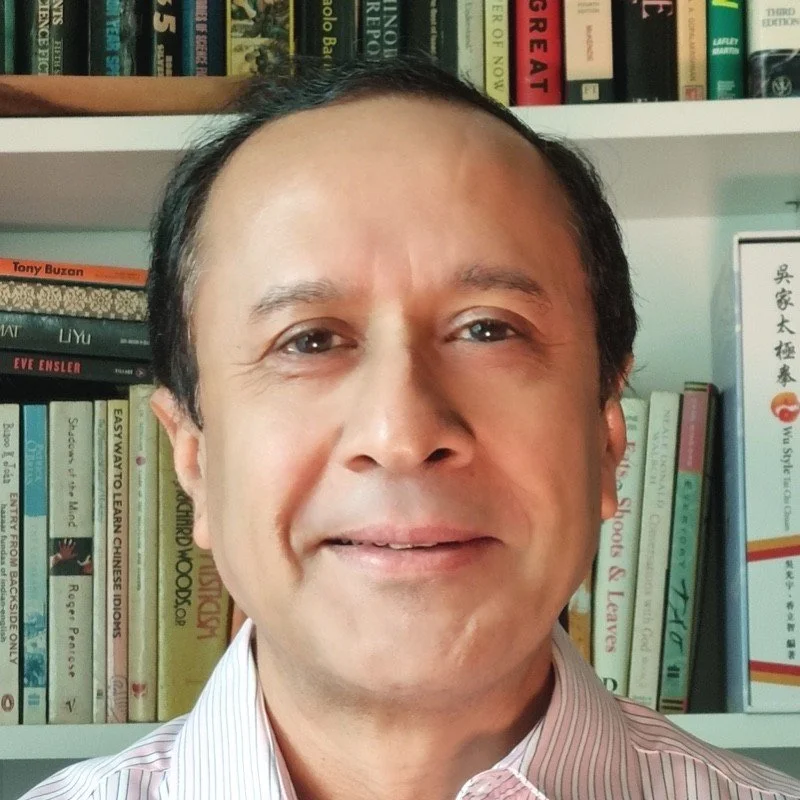
Chapter 9: From Cloud to Clinic: An Executive’s Leap into Africa’s Digital Health by Manny Samuel, Meridional Health
This author shares his personal transition from digital transformation business executive to healthcare entrepreneur bringing digital transformation to the African healthcare ecosystem. His company enables access to healthcare products and services, beginning with Morocco and Madagascar. He shares opportunities, challenges, and innovative problem-solving for other professionals considering a change and other businesses aiming to revolutionize healthcare with digital capabilities.

Author: Manny Samuel, CEO of Meridional Health, has 35+ years of experience across the globe in digital transformation, innovation, consulting, business development, and sales for healthcare and other industries. A former IBM executive, he uses technology to enable breakthrough value-add. Meridional Health enables access to healthcare products and services in Africa by harnessing the power of digital transformation, beginning with Morocco and Madagascar.
Conclusions, Insights, and Ways Forward for Global Healthcare by Dr. CJ Meadows, S P Jain School of Global Management
This chapter distills the chapter insights into themes for reaching across boundaries to connect ideas, technology, and people in new ways. It also highlights the possibilities in “reverse innovation”, where innovations in economically-challenged environments are applied to wealthy markets, reducing waste and financial burdens, while improving quality. Readers will be encouraged to connect to others through the multimedia intro community board, LinkedIn profiles of the editor and authors, and subsequent events, as well as discussing with the editor’s digital twin how to bring the ideas to life in the reader’s own situation.
Book Editor & Author: Awarded as one of Asia’s Top-10 Women in IT, Dr. CJ Meadows is Professor and Innovation Center Head at SPJ Global and Chairman of The Tiger Center. Holding a Doctorate in Business Administration and IT from Harvard Business School, she has authored 13 books and over 50 articles on innovation and related topics. She has 30+ years’ global experience as a consultant, entrepreneur, educator, and Accenture IT and Business Strategy consultant.